HENGFENGYOU ELECTRIC --SMART ELECTRIC GLOBAL SERVICE PROVIDER



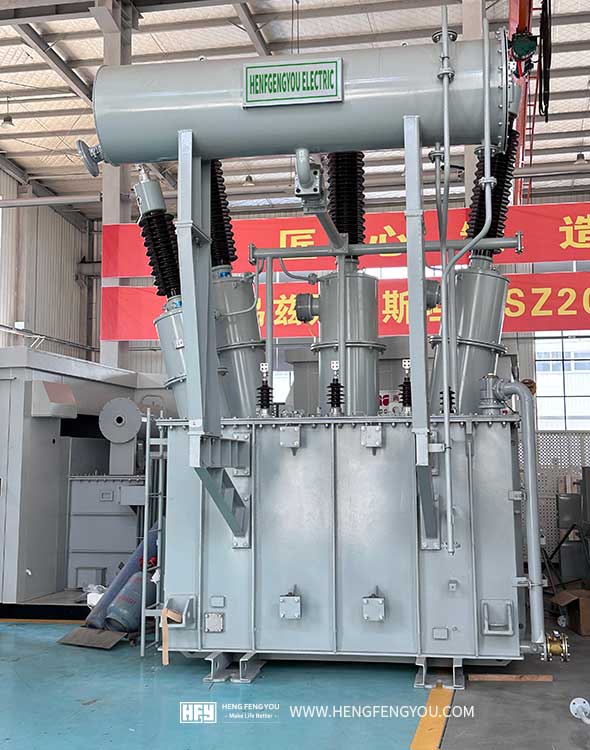
Manufacturer
HENGFENGYOU ELECTRIC
Standard on which performance data is based
IEC 60076,GB 1094-1996,GB/ T6451-2008,GB/T 7597-2007,GOST,SABS,CE,IEC,UL
Type
OIL IMMERSED
Method of Cooling
ONAN, ONAF, OFAF, OFWF, ODAF, ODWF
Rated Power
25MVA
Voltage Ratio
110kv/6.3kv 110kv/6.6 kv 110kv/10.5kv 110kv/11kv
Frequency
50/60HZ
Tap Changer
OCTC/OLTC
HV·Tapping
±3×1.5%,±5×1.5%,±8×1.25%,±8×1.75%
Vector Group
YNd11
Core Material
CRGO
Winding Material
Copper
No Load Losses (GB/T S13 series)
28.4kw
Load Losses (GB/T S13 series)
110kw
Dimensions of Transformer
5250mm*5340mm*5020
HENGFENGYOU ELECTRIC offers highly reliable, custom-engineered 25 MVA transformers. While sharing the same electromagnetic principles, different structural designs are tailored for specific substation applications:
Rated Voltage (HV Side): 6 kV, 10 kV, 11 kV, 20 kV, 22 kV, 33 kV, 35 kV
Application: Regional distribution substations, industrial plants, mining enterprises, and public utilities.
Rated Voltage (HV Side): 66 kV, 110 kV, 115 kV, 132 kV, 138 kV, 220 kV, 230 kV, 232 kV
Application: Main power transmission grids, power plant step-up stations (thermal/hydro/solar/wind), and heavy-industry primary substations.
International Standards: Fully compliant with GB (China), IEC 60076 (International), GOST (Central Asia), EN (Europe), NF, and ANSI/IEEE (Americas). Custom engineering is available upon request to meet local grid utility standards.
Global Certifications: Certified by ISO 9001, CE, IEC, SABS (South Africa), COC, CSA, and UL.
Ultra-High Efficiency: Operating efficiency exceeds 99%, strictly complying with the strict European 2015/2014/548/EC Eco-design Tier 2 energy efficiency regulations to reduce long-term operating losses.
Maintenance-Free Design: Built with IP65 protection, providing exceptional dustproof and moisture-proof sealing. Engineered for a reliable service lifespan of over 25 to 30 years under harsh environmental conditions.
Eco-Friendly Performance: Offers the option of FR3 vegetable ester oil (biodegradable natural ester fluid) to reduce carbon footprint and meet strict environmental safety guidelines.
Robust Overload Capacity: High-purity copper-coil winding allows temporary short-term overloads of up to 150% of the rated capacity for up to 2 hours (requires strict monitoring of oil temperature ≤ 95℃).

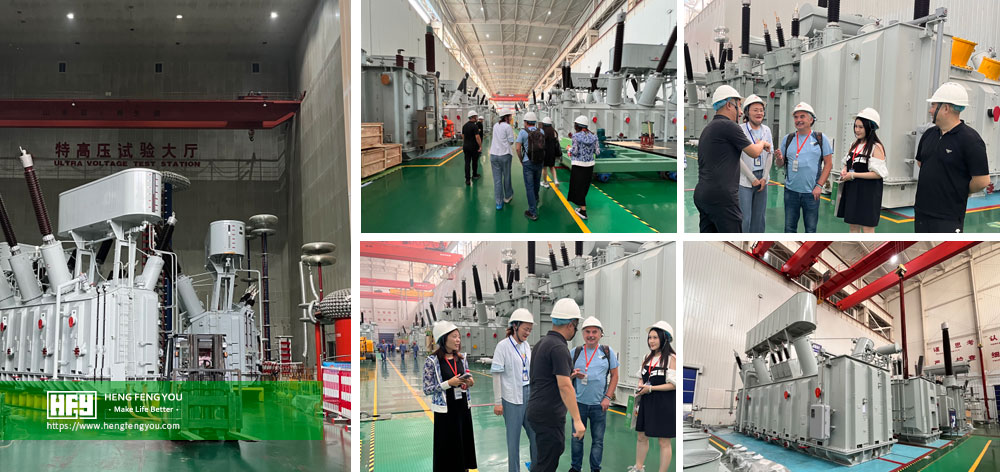
Our mission is to stand as a global leading manufacturer of high-voltage transmission equipment. Backed by decades of manufacturing expertise and engineering technology, we have supported grid construction across more than 50 countries.
When utility contractors and industrial clients choose HENGFENGYOU, they gain a long-term, trusted partner dedicated to delivering premium electrical products, fast delivery, and lifetime technical support.
A: A 25 MVA-110KV power transformer is a high-voltage substation device used to step up or step down voltage in transmission grids. It typically connects high-voltage transmission lines (110kV / 115kV / 132kV primary side) to lower-voltage distribution networks (e.g., 10kV, 11kV, 33kV, 35kV secondary side).
A: 25 MVA transformers generally use oil-immersed cooling methods, including:
ONAN (Oil Natural Air Natural): Passive cooling via natural oil convection and radiator airflow.
ONAF (Oil Natural Air Forced): Uses cooling fans to increase heat dissipation, ideal for high ambient temperatures or temporary peak overloads.
A: When issuing a tender or inquiry, please provide:
Voltage Ratio: e.g., 110kV to 11kV, 115kV to 33kV, etc.
Impedance Voltage: Typically around 10.5% (customizable per grid requirements).
Vector Group: Commonly YNd11, YNy0, etc.
Tap Changer: On-Load Tap Changer (OLTC) or Off-Circuit Tap Changer (OCTC).
A: Selection depends on your local national grid requirements. Countries in Africa and Southeast Asia generally adopt IEC 60076, while the Americas and parts of the Middle East may specify ANSI/IEEE C57.12.00. HENGFENGYOU ELECTRIC can customize designs to comply with either standard.
A: 1. Site Preparation: Build a solid concrete foundation, oil containment pit, and fire barrier walls. 2. Transport & Rigging: Use specialized heavy-haul transport and cranes to prevent acceleration shocks to the internal core. 3. Oil Processing: Perform vacuum oil filling, filtration, and degassing to ensure dielectric strength. 4. Field Testing: Complete insulation resistance, voltage ratio, vector group, and Dissolved Gas Analysis (DGA) tests before energization.
A: Commissioning involves:
Pre-energization Checks: Verifying protection relays, CT/PT calibration, oil levels, and solid system grounding.
No-Load Test: Energizing the transformer at rated voltage to measure core losses and excitation current.
Load & Temperature Rise Test: Verifying thermal stability under simulated load and ensuring the winding/oil temperature remains within limits.
A: DGA (Dissolved Gas Analysis): Online or laboratory gas chromatography to detect key fault gases (hydrogen, methane, acetylene) indicating thermal or electrical faults.
Temperature Monitoring: Winding Temperature Indicators (WTI) and Oil Temperature Indicators (OTI) with alarm/trip contacts (typically alarm at 85°C, trip at 95°C).
Partial Discharge (PD) Testing: Detects localized insulation degradation within the oil tank.
A: Annual Oil Sampling: Testing dielectric breakdown voltage (BDV), moisture content, and acidity.
Visual Inspection: Checking for oil leaks around gaskets, valves, and bushings, and inspecting silica gel breathers.
Cooling System Maintenance: Testing fan control circuits and cleaning radiator banks.
A: Insulation Breakdown: Often caused by moisture ingress, oil aging, or cumulative transient overvoltages.
Overheating: Caused by prolonged overloading, blocked cooling radiators, or cooling fan failures.
Bushing Flashover: Due to surface contamination (dust/salt) or internal moisture.
Leave a message now - get the latest industry insights, star products, and success stories of hengfengyou electric