V. Frequently Asked Questions (FAQ) — Pain Points Unique to 16 MVA Class
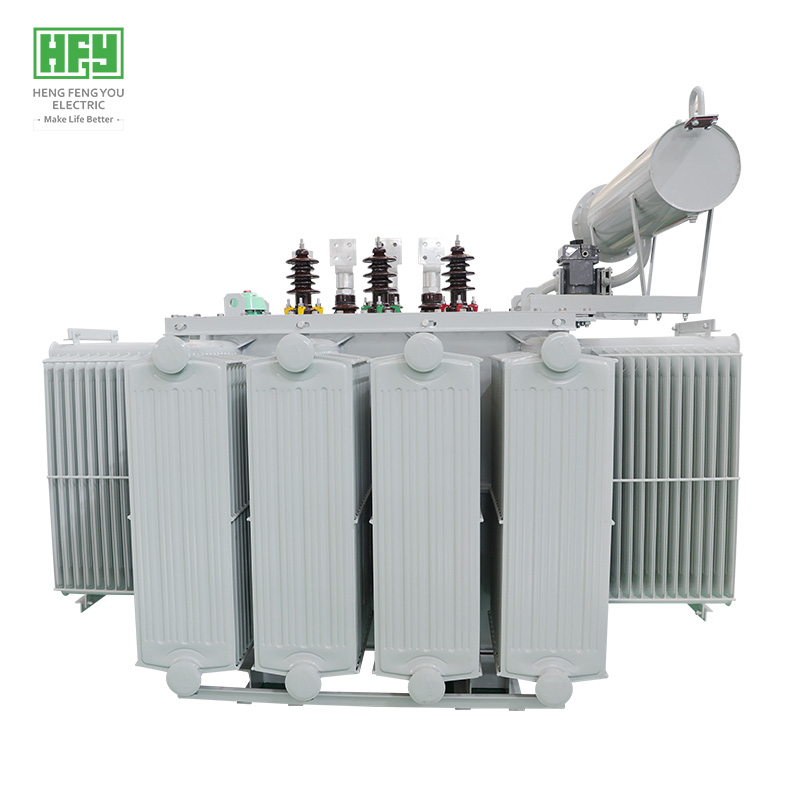
Q1: What makes 16 MVA an "IEC-preferred" capacity, and why does that matter to me?
IEC 60076 defines preferred capacities to standardize manufacturing and reduce costs. The 16 MVA rating is part of the R10 series (10, 12.5, 16, 20, 25 MVA...). Benefits to you:
-
Lower cost per kVA compared to non-standard ratings
-
Faster delivery (standard tooling exists)
-
Proven design (thousands of identical units in service)
-
Easy paralleling with identical units
-
Global spare parts availability (standardized components)
Q2: How do I manage the extreme LV current of 23,094 A?
At 23,094 A full load, this is among the highest LV currents in the distribution transformer class. Connection recommendations:
-
Primary recommendation: Copper busbar trunking system with 5–6 parallel runs of 120×10 mm busbars per phase
-
Alternative: 20–24 parallel runs of 400 mm² XLPE cables per phase (requires very large cable box)
-
Preferred approach: Direct-coupled air circuit breaker (ACB) rated for 25,000 A, bolted to transformer busbar chamber
-
Critical: All busbar joints must be verified by thermographic survey during commissioning
-
Design consideration: Skin effect becomes significant at this current level—busbar thickness and spacing must be optimized
Q3: Is this transformer suitable for indoor installation?
Absolutely not for the oil-immersed version. Regulations prohibit indoor installation of oil-filled transformers above 10 MVA in most jurisdictions due to:
-
Oil containment requirements (5,500–8,000 liters potential spill)
-
Fire code restrictions (NFPA 850, IEC 61936)
-
Heat dissipation challenges (65–90 kW of losses)
For indoor installations, specify the dry-type (cast resin) version with forced air cooling.
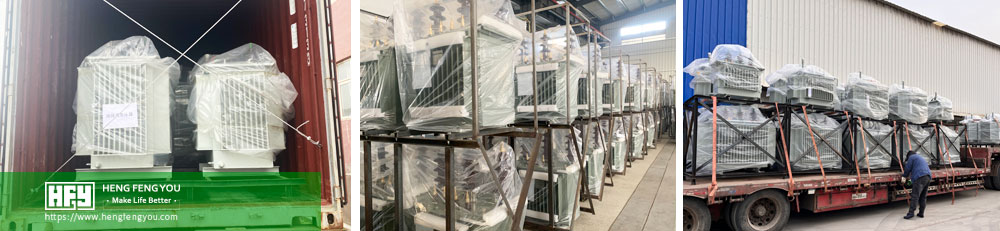
Q4: What are the transport and logistics challenges for a 16 MVA transformer?
-
Weight: 19,000–26,000 kg filled—exceeds standard road limits in all countries
-
Height: 3.5m may exceed bridge clearances
-
Solutions:
-
Ship without oil (reduces weight by 5,000–7,000 kg)
-
Use specialized transformer transport trailer with hydraulic suspension
-
Obtain oversize/overweight transport permits (allow 2–4 weeks for permitting)
-
Arrange crane capacity ≥ 35 tons at destination
-
Consider rail transport for long-distance domestic delivery
Q5: What is the recommended protection scheme for a 16 MVA transformer?
Comprehensive protection is mandatory at this capacity:
-
HV side: Vacuum circuit breaker with directional overcurrent (67), earth fault (50N/51N), and restricted earth fault (64REF)
-
LV side: Air circuit breaker with LSI trip unit and ground fault protection
-
Transformer differential protection (87T): Highly recommended for fault discrimination
-
Transformer body: Buchholz relay, pressure relief valve, WTI, OTI, oil level gauge
-
System protection: Surge arrestors on HV side, neutral grounding resistor (if applicable), ground resistance ≤ 4Ω
-
Advanced: Partial discharge monitoring, online DGA analyzer, bushing condition monitoring
Q6: Can I parallel two 16 MVA transformers for N+1 redundancy?
Yes, and this is a common configuration for critical facilities. As an IEC-preferred capacity, identical units are readily available:
-
Identical vector group (Dyn11 or Yyn0)
-
Voltage ratio matching within ±0.5%
-
Impedance voltage (Z%) within ±3% of each other (tight tolerance achievable with standard designs)
-
Same OLTC position
-
Circulating current < 5% of rated current
We provide impedance matching certificates and paralleling simulation reports for multi-unit installations.
Q7: What is the expected noise level, and what mitigation options exist?
-
Standard design (OFAF): 78–85 dB(A) at 1 meter
-
Low-noise core design: 70–76 dB(A) (reduced flux density, step-lap core joints)
-
Acoustic enclosure: Reduces external noise by 20–30 dB(A)
-
Vibration isolation: Spring mounts reduce structure-borne noise
-
Enclosure ventilation: Silenced intake/exhaust lowers fan noise contribution
For noise-sensitive environments, we recommend specifying both low-noise core and acoustic enclosure.
Q8: What is the recommended DGA monitoring strategy for a 16 MVA transformer?
As a critical asset, rigorous DGA monitoring is essential:
-
Continuous online DGA monitor: Strongly recommended (cost: $5,000–$12,000)
-
Key gas thresholds (IEC 60599):
-
H₂ > 150 ppm: Investigate
-
C₂H₂ > 5 ppm: Immediate action required
-
CO > 700 ppm: Paper degradation possible
-
CO₂ > 5,000 ppm: Accelerated aging
-
Sampling frequency:
-
Interpretation: We provide Duval Triangle analysis with each DGA report
Q9: What is the recommended maintenance schedule?
-
Daily (remote SCADA): Oil temperature, load current, OLTC position, alarm status
-
Weekly: Visual inspection for leaks, oil level, fan operation
-
Monthly: DGA sample (first year), infrared thermography of connections
-
Quarterly: Bushing capacitance/power factor test, tap changer inspection
-
Annually: Insulation resistance (IR), polarization index (PI), winding resistance, turns ratio
-
Every 3 years: Full oil dielectric test, furan analysis, frequency response analysis (FRA)
-
Every 10 years: Internal inspection, core bolt insulation test, tank integrity test
Q10: What warranty and post-sale support do you offer?
-
Standard warranty: 24 months from commissioning or 27 months from Bill of Lading
-
Extended warranty: Up to 5 years (includes annual DGA analysis, remote monitoring, and priority technical support)
-
Spare parts commitment: Guaranteed availability for minimum 20 years
-
Technical support: 24/7 hotline for critical issues; on-site commissioning supervision included
-
Training: Comprehensive operator and maintenance training program (documentation + on-site session)
-
Service network: Authorized service partners in 30+ countries for rapid response
Grow Your Business with Hengfengyou Electric
Our vision is to become the world's most trusted manufacturer of power transformers from 50 kVA to 50 MVA+. With decades of engineering excellence, thousands of successful IEC-preferred capacity deliveries across 50+ countries, and an unwavering commitment to quality, Hengfengyou Electric delivers transformers that power the world's most critical infrastructure—reliably, efficiently, and sustainably.