HENGFENGYOU ELECTRIC --SMART ELECTRIC GLOBAL SERVICE PROVIDER



Writer: Hengfeng you electric Time:2026-10-15 views:times
Metal oxide surge arresters (MOAs) use the nonlinear resistance characteristics of zinc oxide varistor elements to limit voltage and discharge surge currents during overvoltage events, thereby reducing the risk of insulation damage to electrical equipment.
Common types include:
Composite-housed surge arresters: Suitable for air-insulated substations (AIS), power distribution systems, and other outdoor applications that meet the product's design specifications.
GIS tank-type surge arresters: Designed for gas-insulated switchgear (GIS) applications, these arresters must match the GIS structure, interfaces, and insulation coordination requirements.
Line surge arresters: Used on overhead transmission and distribution lines. Depending on the line design requirements, products with or without series gaps may be selected.
Station-class surge arresters: Used to protect transformers, busbars, voltage transformers, and other equipment against overvoltages. The specific configuration depends on the system design.
Different types of surge arresters are not interchangeable based on voltage rating alone. Their structural design, protective characteristics, and actual installation conditions must also be evaluated.
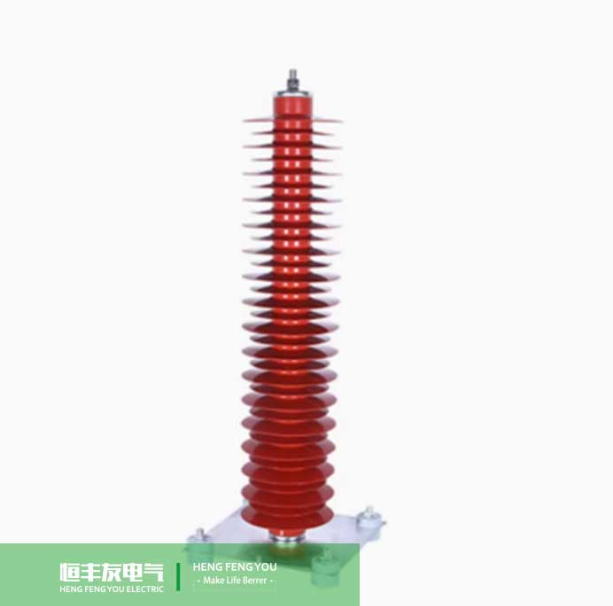
Two key parameters in surge arrester selection are rated voltage (Ur) and maximum continuous operating voltage (Uc).
Uc is the power-frequency voltage that a surge arrester can withstand continuously under specified conditions. Ur is associated with the arrester's ability to withstand temporary overvoltages and other performance characteristics. These parameters serve different purposes and should not be determined simply from the nominal voltage of the power grid.
For 10kV, 35kV, and 110kV systems, the following factors should be considered:
Maximum system operating voltage and the arrester's installation location;
System neutral grounding method;
Temporary overvoltages caused by single-phase earth faults and their duration;
The arrester's continuous operating voltage, rated voltage, and temporary overvoltage withstand capability.
Particular attention is required for unearthed-neutral and resonant-grounded systems. Voltage rises during single-phase earth faults must be carefully evaluated, and arrester parameters intended for effectively grounded systems should not be applied directly without verification.
Final selection should be checked against system design documents, applicable standards, and the manufacturer's technical data. Incorrect voltage selection may increase the arrester's long-term operating stress or compromise its protective performance.
Residual voltage is the voltage appearing across a surge arrester when it conducts a specified impulse current. The arrester's protective level must be coordinated with the insulation withstand levels of transformers, GIS equipment, switchgear, and other protected equipment.
The following factors should be reviewed during selection:
Lightning impulse residual voltage and relevant switching impulse protection levels;
Insulation parameters of the protected equipment, including lightning impulse withstand voltage;
Electrical distance between the surge arrester and the protected equipment;
Connection lead length and the additional voltage caused by lead inductance.
For GIS projects, the selection of an internal tank-type surge arrester or a properly verified external arrangement should be based on equipment design, insulation coordination calculations, and the manufacturer's requirements.
External surge arresters are not universally unsuitable for GIS applications. However, their installation location, protective distance, and the effects of lead inductance must be carefully evaluated.
Comparing arrester residual voltage values alone, without considering installation conditions, may not accurately reflect the actual protection provided at the terminals of the protected equipment.
Environmental conditions affect the reliability of surge arrester external insulation, particularly in coastal areas, industrial pollution zones, and high-altitude locations.
Normal environments: Determine the housing design and creepage distance according to system voltage, equipment insulation requirements, and site conditions.
Coastal and industrial pollution environments: Consider salt spray, conductive dust, pollution severity, and wetting conditions. Select the appropriate creepage distance, housing material, and structural design in accordance with applicable standards.
High-altitude environments: Verify external insulation performance according to the project altitude and the product's specified operating conditions. Apply any necessary corrections in accordance with relevant standards and manufacturer recommendations.
Outdoor surge arresters should also be selected with consideration for ambient temperature, humidity, mechanical loads, and other special operating conditions.
Product selection should not be based solely on a region's name or a single environmental indicator. Actual site conditions and project specifications must be evaluated.
To improve selection accuracy and reduce equipment compatibility issues and project delivery risks, buyers should prepare the following information before procurement:
System information: Nominal voltage, maximum operating voltage, and neutral grounding method.
Protection requirements: Insulation levels of protected equipment, installation locations, and required protection levels.
Product parameters: Ur, Uc, residual voltage, temporary overvoltage withstand capability, and relevant discharge characteristics.
Environmental conditions: Site altitude, pollution severity, ambient temperature, and indoor or outdoor installation requirements.
Structure and accessories: Mounting interfaces, connection methods, grounding requirements, and whether monitoring devices are needed.
Project documentation: Applicable standards, technical specifications, product test reports, and required compliance documents.
For overhead line projects, the arrester type should also be determined according to line insulation levels, lightning activity, and grounding conditions.
For important substations, leakage current monitoring devices or surge counters may be specified according to operation and maintenance requirements.
High-voltage surge arrester selection should not rely solely on nominal grid voltage or a standard product model.
Rated voltage and maximum continuous operating voltage must be matched to the system grounding method and temporary overvoltage conditions. Residual voltage and protective levels must satisfy insulation coordination requirements, while the external insulation design must be suitable for local pollution, altitude, and climate conditions.
Hengfengyou Electric supplies composite-housed surge arresters, GIS tank-type surge arresters, line surge arresters, and other related products. These products can support applications in GIS substations, PV step-up substations, and industrial and mining power distribution projects.
The final product configuration should be determined according to system parameters, installation conditions, and project technical specifications.
Email: hunter@hengfengyou.com
WhatsApp / Mobile: +86 18224429139
WhatsApp:
+86 13969788801
+86 15853252696
Tel:+86-0532-68688801
Fax:+86-0532-87038801
Email: hfy@hengfengyou.com
Address: No.638,Zhongcheng Road, Chengyang District, Qingdao City,China
Leave a message now - get the latest industry insights, star products, and success stories of hengfengyou electric