II. What Are the Main Components of a Power Distribution System?
A power distribution system is not made up of a single piece of equipment. It consists of distribution lines, substations or distribution stations, transformers, switchgear, protection and control equipment, and terminal electrical equipment.
1. Distribution Lines
Distribution lines are responsible for transmitting electrical energy from substations, distribution stations, or other power sources to downstream distribution equipment and end users.
Depending on the voltage level, distribution lines can be classified as high-voltage, medium-voltage, and low-voltage lines. The specific voltage levels used vary between countries and regions. For example, some projects use medium- and high-voltage distribution levels such as 6kV, 10kV, 11kV, 13.8kV, 22kV, 33kV, or 35kV, while common low-voltage systems include 380/220V or 400/230V configurations.
The design of distribution lines generally needs to consider factors such as line capacity, power supply distance, short-circuit current, voltage drop, line losses, environmental conditions, and power supply reliability.
2. Substations and Distribution Stations
Substations are important facilities in the power system for voltage transformation, power collection, distribution, and control.
Step-up substations at power plants mainly increase the voltage generated by generators to a level suitable for long-distance power transmission. Substations located closer to end users generally perform voltage reduction and power distribution, converting higher-voltage electricity into voltage levels suitable for regional distribution and end-use applications.
Electrical equipment in substations can generally be divided into primary equipment and secondary equipment.
Primary equipment directly participates in the generation, transmission, transformation, and distribution of electrical energy. It includes transformers, circuit breakers, disconnectors, instrument transformers, busbars, surge arresters, and other equipment.
Secondary equipment is mainly used for measurement, monitoring, control, and protection of primary equipment and the overall power system. Typical examples include protective relays, measuring instruments, control systems, and communication equipment.
3. Distribution Transformers
Distribution transformers are important components of power distribution systems. They are mainly used to convert medium- or high-voltage electricity into low-voltage electricity required by end users.
Depending on the insulation and cooling method, distribution transformers can be classified into oil-immersed transformers, dry-type transformers, and other types. Depending on the installation method and project requirements, integrated solutions such as compact substations and prefabricated substations can also be used.
The transformer capacity, voltage ratio, frequency, impedance, vector group, and cooling method need to be determined according to the actual load conditions and project technical requirements.
For different applications such as industrial parks, commercial buildings, mines, data centers, wind farms, and solar power projects, the technical configuration of the transformer may also vary.
4. High- and Low-Voltage Switchgear
Switchgear is mainly used for receiving, distributing, controlling, and protecting electrical energy and is an important part of power transformation and distribution systems.
High- and medium-voltage switchgear is commonly used in substations, distribution rooms, industrial facilities, and renewable energy projects. Common products include KYN28A, HXGN, XGN, and ring main units (RMUs).
Low-voltage switchgear is mainly used for incoming feeders, bus couplers, outgoing feeders, and load control in low-voltage distribution systems. Common types include GGD, GCS, GCK, and MNS.
The selection of switchgear needs to take into account the system voltage, rated current, short-circuit capacity, installation method, incoming and outgoing connection arrangements, protection rating, and project operating requirements.
III. High-, Medium-, and Low-Voltage Distribution Systems
Distribution systems can be classified into high-voltage, medium-voltage, and low-voltage distribution systems according to voltage level. However, it should be noted that the specific definitions and voltage ranges of high, medium, and low voltage are not completely consistent across different countries and regions.
In common distribution systems in China, voltage levels such as 6kV, 10kV, and 35kV are widely used in different types of industrial and public distribution projects, while 380/220V is a common configuration for terminal low-voltage distribution systems.
International engineering projects may also use voltage levels such as 11kV, 13.8kV, 22kV, 33kV, 34.5kV, and 400/230V. Therefore, export-oriented power distribution equipment cannot simply be selected according to the voltage system of a single country. Instead, the selection should be based on the grid conditions, applicable technical standards, and customer requirements of the project location.
For major equipment such as transformers and switchgear, the system frequency must also be considered. China and many other countries use 50Hz systems, while North America and some other markets commonly use 60Hz systems.
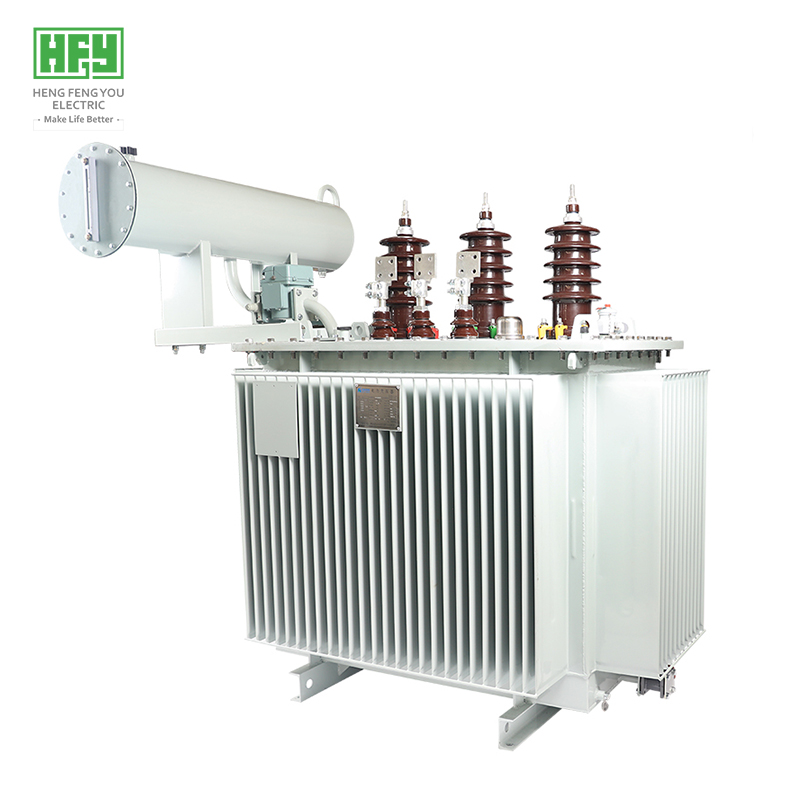
IV. Operation and Maintenance of Distribution Transformers
Distribution transformers remain energized and in operation for extended periods, and their operating reliability directly affects the stability of the entire power distribution system.
In actual operation, reasonable inspection and maintenance plans should be developed based on the equipment type, operating environment, and load conditions. Regular inspections can help identify abnormalities related to temperature, oil level, insulation, operating sounds, and protection devices at an early stage.
Common abnormal operating conditions of transformers include the following.
1. Abnormal Transformer Operating Sounds
Under normal operating conditions, transformers usually produce a stable electromagnetic humming sound. If there is a noticeable increase in humming, abnormal vibration, discharge noise, or other irregular sounds during operation, the load variation, condition of the core and clamping structure, windings, bushings, and connection points should be inspected.
If noticeable discharge noise is present, particular attention should be paid to the insulation system and high-voltage connection points.
2. Continuous Increase in Transformer Oil Temperature
When the load and cooling conditions are generally normal, a continuous increase in transformer oil temperature requires checking whether the actual load exceeds the designed range. The radiators, cooling system, temperature indicators, and ventilation conditions should also be inspected.
For oil-immersed transformers, the ambient temperature and seasonal variations should also be taken into consideration. The operating condition of the equipment should not be judged solely on the basis of a single temperature reading.
3. Changes in Insulating Oil Condition
The insulating oil in oil-immersed transformers serves both insulation and heat dissipation functions. If the oil color becomes noticeably abnormal, the oil quality deteriorates, or other abnormalities are observed during operation, oil samples should be taken for testing according to the equipment maintenance requirements.
For transformers that have been in operation for an extended period, regular oil sampling and testing can help evaluate the condition of the insulating oil. The results should be considered together with insulation resistance, dielectric loss, and other test results to assess the overall insulation condition of the transformer.
4. Abnormal Conservator Oil Level, Oil Leakage, or Oil Ejection
During the operation of oil-immersed transformers, the oil level and the sealing conditions of the tank, bushings, valves, radiators, and other components should be inspected regularly.
If significant oil leakage, an abnormal decrease in oil level, or oil ejection occurs, the transformer should be taken out of service for inspection. Based on the site conditions, it should be determined whether there is a sealing failure, internal fault, abnormal pressure, or other problem.
5. Three-Phase Voltage or Current Imbalance
Under normal three-phase system operation, the voltage and current of each phase should remain within a reasonable range. If significant imbalance occurs, the load distribution, line connections, connection points, and transformer condition should be checked.
For low-voltage distribution systems, particular attention should also be paid to the distribution of single-phase loads. A large concentration of single-phase loads on one phase may result in an imbalance of three-phase currents.
6. Operation of Protective Relays
If the transformer experiences overcurrent, instantaneous overcurrent, differential, gas, or other protection trips, the specific type and cause of the protection operation should first be confirmed. The transformer should not be re-energized before the cause has been identified.
Fault records, operating parameters, and inspection results of primary equipment should be considered together to determine whether the issue is caused by an external line fault, abnormal load, or an internal transformer fault.
7. Flashover or Abnormal Discharge at Bushings
Transformer bushings provide insulation between high-voltage conductors and grounded parts. If discharge marks, flashover, cracks, or abnormal heating are found on the bushing surface, the equipment should be inspected promptly.
For equipment operating for extended periods in high-humidity, high-salt-spray, dusty, or polluted environments, particular attention should also be paid to the cleanliness of the bushing surface and its insulation performance.
8. Abnormalities in the Tap Changer
The tap changer is used to regulate the output voltage of a transformer and is an important part of the transformer voltage regulation system.
If an abnormal tap position, voltage regulation failure, poor contact, or operating mechanism fault occurs, the tap changer should be inspected according to its type. For on-load tap changers, regular maintenance should also be carried out in accordance with the equipment manufacturer's requirements.
V. How to Improve the Operating Reliability of a Power Distribution System?
The reliability of a power distribution system depends not only on the quality of individual equipment but also on system design, equipment selection, installation, commissioning, and subsequent maintenance.
First, the transformer capacity should be properly determined according to the actual load. Long-term overload operation should be avoided, while excessive equipment capacity should also be avoided to prevent unnecessary investment and reduced operating efficiency.
Second, high- and low-voltage switchgear should be selected according to the project voltage level and short-circuit capacity. Proper coordination should also be ensured between circuit breakers, protection devices, and other equipment.
For industrial facilities, mines, data centers, renewable energy projects, and other applications where a high level of power supply continuity is required, standby transformers, backup power supplies, or dual-power supply systems can be configured according to actual requirements.
In addition, the environmental conditions at the project site should be fully considered. High temperatures, high humidity, salt spray, dust, marine environments, and outdoor installation conditions can all affect the operation of transformers, switchgear, and other distribution equipment. Therefore, the equipment protection rating, anti-corrosion treatment, cooling method, and insulation configuration should also be designed accordingly.
VI. What Factors Should Be Considered When Selecting Power Distribution Equipment?
In actual projects, the selection of power distribution equipment generally needs to take the following factors into consideration:
-
System voltage level;
-
System frequency;
-
Transformer capacity and actual load;
-
Maximum operating current;
-
Short-circuit current and interrupting capacity;
-
Equipment installation environment;
-
Protection rating and corrosion protection requirements;
-
Wiring method and system operating mode;
-
Local grid standards and technical specifications;
-
Project maintenance and operating requirements.
For export projects, particular attention should be paid to local electrical standards and certification requirements. Different markets may adopt different standards systems, such as IEC, IEEE, GOST, EN, and ANSI. Equipment design, testing, certification, and technical documentation should therefore be matched to the specific project requirements.
Therefore, when purchasing transformers, switchgear, or complete power distribution equipment, customers should not focus only on equipment capacity and price. Voltage, frequency, environmental conditions, applicable standards, protection configuration, and long-term operating conditions should all be considered comprehensively.
VII. Hengfengyou Electric and Power Distribution Equipment
The power distribution system is an important link connecting the power grid with end users, while transformers, switchgear, and other distribution equipment form the foundation for stable system operation.
Hengfengyou Electric specializes in the R&D, manufacturing, and export of power transmission and distribution equipment. Based on the technical requirements of different countries and projects, we provide distribution transformers, oil-immersed transformers, dry-type transformers, high- and low-voltage switchgear, and other related power distribution equipment.
For industrial, commercial, mining, renewable energy, and infrastructure projects, equipment can be configured according to the system voltage, capacity, frequency, installation environment, and applicable local technical standards.
For projects requiring power distribution equipment selection, proper technical parameter matching and complete system design are more important than focusing on the specifications of a single piece of equipment. Through appropriate equipment selection, standardized installation and commissioning, and continuous operation and maintenance, the safety, reliability, and operating efficiency of the power supply and distribution system can be further improved.
Hengfengyou Electric continues to provide power transmission and distribution equipment and project support services to customers worldwide, helping customers select suitable transformers, switchgear, and power distribution solutions according to their actual power requirements.