HENGFENGYOU ELECTRIC --SMART ELECTRIC GLOBAL SERVICE PROVIDER



Writer: Hengfeng you electric Time:2026-10-31 views:times
Realistic Challenges in Project Selection In global power distribution engineering projects, oil-immersed transformers and epoxy resin cast dry-type transformers are the two most widely used distribution transformer equipment types. Many procurement personnel directly use procurement price as the primary selection criterion, ignoring fire protection codes, installation environments, operation and maintenance conditions, and local mandatory standards. Consequently, equipment fails inspection upon arrival, frequent failures occur later, and the total cost far exceeds the budget.
Many overseas projects frequently encounter two typical problems: some open-pit mining projects blindly select dry-type transformers, significantly increasing equipment procurement costs; while some basement or densely populated building projects select oil-immersed transformers, which, restricted by local fire regulations, require additional accident oil collection pits and firewall construction, dramatically raising civil engineering modification costs or even preventing commissioning altogether.
Hengfengyou Electrical Technical Engineer (lyra@hengfengyou.com) Reminder: There is no absolute "better" transformer, only a transformer suited to the project's working conditions. The most core difference between the two lies in their insulation and cooling media: oil-immersed transformers rely on transformer oil for insulation and heat dissipation, whereas dry-type transformers rely on air plus solid epoxy resin insulation for heat dissipation. This core difference derives all differences in safety, maintenance, cost, and application scenarios.
Oil-Immersed Transformers: Widely used in outdoor substations, open-pit mines, ground-mounted photovoltaic power stations, and large-capacity industrial projects.
Dry-Type Transformers: Mostly used in indoor distribution rooms, underground machine rooms, data centers, hospitals, commercial complexes, and other densely populated areas.
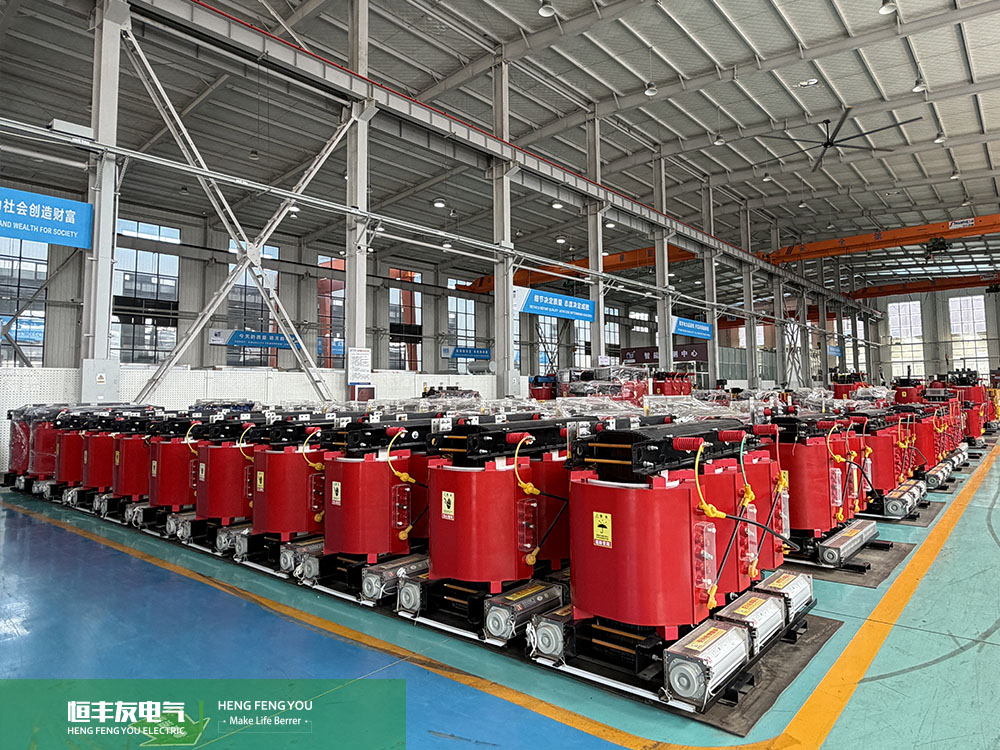
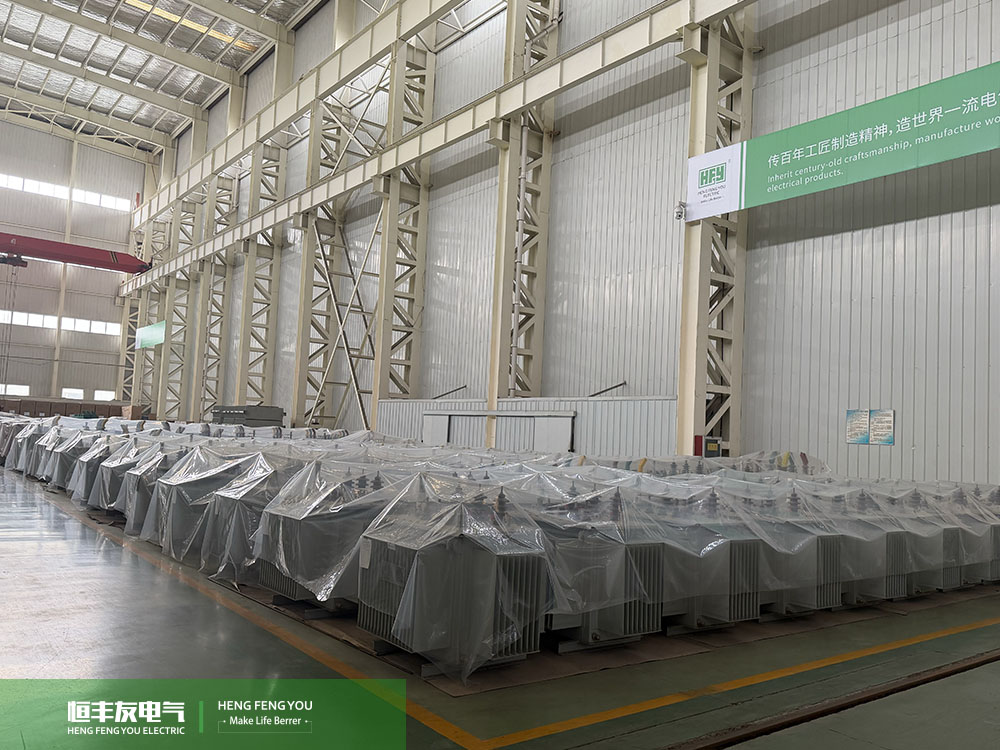
Before determining the transformer type, project teams must verify the following key technical conditions one by one, as these factors directly dictate which product category should be selected.
Installation Location and Fire Regulations: If equipment is placed indoors, in underground confined spaces, or in densely populated buildings, most overseas regional fire codes restrict oil-filled electrical equipment, making dry-type transformers the preferred choice. If equipment is located outdoors or in independent distribution buildings without strict indoor fire constraints, oil-immersed transformers are a more economical solution.
Load Characteristics and Overload Requirements: The cooling medium of oil-immersed transformers is transformer oil, granting stronger short-term overload tolerance, making them suitable for scenarios with heavy impact loads and continuous heavy-duty operation. Dry-type transformers have limited overload capacity; prolonged overload accelerates epoxy resin insulation aging, requiring strict load rate control.
On-Site Operation and Maintenance Conditions: In remote overseas mining areas and overseas job sites, if professional personnel for oil testing and oil treatment are lacking, selecting dry-type transformers can eliminate maintenance work such as oil quality testing, oil filtration, and oil replacement. If an on-site electrical maintenance team is available, oil-immersed transformers can run stably over the long term.
Climate and Environmental Conditions: For high temperatures, large diurnal temperature ranges, and dusty outdoor environments, oil-immersed transformer tanks are naturally suited to outdoor conditions. If dry-type transformers are used outdoors, high protection-grade enclosures must be configured, significantly increasing procurement costs. In high-humidity and salt-spray environments, dry-type windings are prone to dust accumulation and condensation, requiring enhanced protective design.
Total Cost of Ownership (TCO): Do not solely compare ex-factory equipment prices. It is necessary to comprehensively calculate the total life-cycle cost, including equipment procurement costs, civil fire modification expenses, annual power losses, and later maintenance costs.
Parameters, Standards, and Comparison Oil-immersed transformers comply with the IEC 60076-1 standard; dry-type transformers comply with the IEC 60076-11 standard, and explosion-proof conditions additionally require the IEC 60079 explosion-proof series standards. The table below directly compares the core technical indicators of the two transformer types.
| Comparison Item | Oil-Immersed Transformer | Dry-Type (Epoxy Resin Cast) Transformer |
| Insulation & Cooling Medium | Mineral / synthetic transformer oil | Air + solid epoxy resin insulation |
| Fire Protection Attributes | Insulating oil is combustible; requires fire isolation and accident oil pits | Non-combustible oil, flame-retardant and fireproof, F1 fire rating |
| Typical Applicable Scenarios | Outdoor substations, open-pit mining areas, ground PV power stations, large-capacity industrial projects | Indoor distribution rooms, underground machine rooms, data centers, densely populated buildings |
| Procurement Cost (Same Capacity) | Lower | 25% to 50% higher |
| Outdoor Adaptability | Oil tank natively adapts to outdoor environments | Must be equipped with IP54 or higher protective enclosures, increasing costs |
| Overload Performance | Excellent, permits larger short-term overloads | Limited overload margin; long-term overload operation is strictly prohibited |
| Routine Maintenance Content | Oil level check, oil quality DGA chromatographic analysis, seal and leakage check | Winding dust cleaning, fan and temperature control device overhaul, no oil maintenance |
| Noise Performance | Oil liquid provides damping, lower operating noise | Noise slightly higher for the same capacity; optional noise reduction solutions available |
| Voltage & Capacity Upper Limit | Capable of high voltage and ultra-large capacity levels | Mostly used for medium and low-voltage distribution levels; high manufacturing cost for large capacities |
Selection Practical Judgment Steps:
Determine the equipment installation location: Outdoor open-air / Indoor confined distribution room / Underground machine room;
Consult local project fire regulations to confirm whether oil-filled electrical equipment is restricted;
Calculate load characteristics to determine whether there are frequent surges or short-term overloads;
Evaluate local maintenance team capabilities to see if transformer oil-related testing and maintenance can be performed;
Comprehensively calculate equipment procurement, civil engineering, losses, and maintenance to evaluate total lifecycle costs;
Confirm target country certifications: CE, EAC, ANSI, and other entry requirements.
Hengfengyou Electrical's oil-immersed and dry-type transformers can both complete type tests in accordance with full IEC standards, providing clients with complete test reports to assist with overseas project certification document preparation.
Real-World Conditions Easily Overlooked During Selection Many projects have fully verified technical parameters, but issues arise post-installation, mostly originating from omitted engineering details.
Do Not Install Dry-Type Transformers Directly Naked Outdoors: Standard dry-type transformers only have an IP20 protection rating and can only be used in clean indoor environments. If a project strictly requires a dry-type transformer to be placed outdoors, it must be equipped with a ventilated protective enclosure and anti-condensation heaters; otherwise, high humidity and dusty environments will cause winding tracking and accelerated insulation aging.
Hidden Costs of Indoor Oil-Immersed Transformers: Even if a project insists on using oil-immersed transformers indoors, under most overseas regional codes, firewalls, accident oil collection pits, and oil drainage pipes must be provided. Civil engineering investment is high, and the comprehensive total cost often exceeds directly purchasing a dry-type transformer—a factor that should be evaluated during the early scheme stage.
Pay Attention to Long-Term Electricity Costs Caused by Losses: Some clients only compare unit equipment prices while ignoring no-load losses and load losses. Transformers operate continuously year-round, and the electricity costs caused by losses can accumulate over a few years to differences exceeding the equipment price difference itself. When selecting, be sure to request measured loss data from the manufacturer rather than relying solely on promotional parameters.
Special Handling of Harmonic Loads: If a project has a large number of non-linear harmonic loads such as frequency converters and UPS systems, regardless of whether oil-immersed or dry-type transformers are used, additional harmonic heating must be considered, requiring capacity derating or K-factor anti-harmonic transformers to avoid abnormal overheating failures.
Myth 1: Dry-type transformer performance is comprehensively superior to oil-immersed.Correction: Dry-type advantages focus on fire protection and oil-free maintenance. For large-capacity, outdoor, and heavy-duty continuous working conditions, oil-immersed transformers offer better comprehensive cost-effectiveness. There is no absolute superiority or inferiority.
Myth 2: Only comparing equipment procurement prices while ignoring civil engineering, loss, and maintenance costs.Correction: Choosing oil-immersed transformers for indoor projects will cause fire civil engineering modification costs to eat up the equipment price difference; choosing dry-type transformers outdoors introduces extra enclosure investments, requiring a total cost calculation.
Myth 3: Dry-type transformers can be placed directly on outdoor sites.Correction: Standard dry-type transformers cannot be used directly outdoors; they must be matched with high-protection enclosures and dehumidification configurations, an item easily missed in procurement budgets.
Myth 4: Oil-immersed transformers cannot be used in any indoor scenario.Correction: Some special independent fire-rated distribution buildings permit oil-immersed transformers, but they must meet full fire-prevention civil engineering conditions, which must be verified against local official codes.
Q1: Should ground photovoltaic power stations choose oil-immersed or dry-type transformers? A: The vast majority of ground PV projects are arranged outdoors, so oil-immersed transformers are preferred. Dry-type transformers are selected only for indoor inverter room installation scenarios.
Q2: Do oil-immersed transformers necessarily require the construction of an accident oil collection pit? A: This depends on the installation location and the fire regulations of the country where the project is located. Independent outdoor arrangements generally have lower requirements; indoor and basement arrangements basically mandate configuration with oil storage facilities.
Q3: What are the design lifespans of the two transformer types? A: Under standard operating conditions and maintenance, the design lifespan of both is 20–30 years. Oil-immersed transformers can extend insulation life through oil filtration and replacement; once dry-type transformer insulation is damp and aged, repair difficulty is higher.
Q4: How should underground mining projects overseas be selected? A: For confined underground spaces with personnel, fire safety priority is highest. Special mining dry-type transformers are preferred, while simultaneously meeting the IEC 60079 series explosion-proof standards.
If you need scheme evaluation, parameter verification, or project inquiries for oil-immersed and dry-type transformers, welcome to contact Hengfengyou Electrical technical engineers to obtain customized technical solutions.Email: lyra@hengfengyou.com WhatsApp: +86-15122242521
Hengfengyou Electrical Group is an export-oriented enterprise focusing on power transmission and distribution products, integrating R&D and manufacturing, and designated as a supplier for Fortune 500 enterprises. Its main products include power transformers, medium and low-voltage switchgear, distribution panels, circuit breakers, transmission towers, wires, and cables. Successfully sold to more than 50 countries worldwide with complete product certifications, Hengfengyou Electrical will provide you with optimal electrical product solutions.Email: lyra@hengfengyou.com WhatsApp: +86-15122242521
IEC 60076-1: Power Transformers - Part 1: General, published officially by the International Electrotechnical Commission.
IEC 60076-11: Power Transformers - Part 11: Dry-Type Transformers, published officially by the International Electrotechnical Commission.
NECA: National Electrical Contractors Association Distribution Equipment Selection Engineering White Paper, 2025 Edition.
WhatsApp:
+86 13969788801
+86 15853252696
Tel:+86-0532-68688801
Fax:+86-0532-87038801
Email: hfy@hengfengyou.com
Address: No.638,Zhongcheng Road, Chengyang District, Qingdao City,China
Leave a message now - get the latest industry insights, star products, and success stories of hengfengyou electric