MCC Motor Control Center Selection Guide: A Comprehensive Analysis of Busbar Current, Drawer Units, Heat Dissipation, and Short-Circuit Withstand Capacity
Writer: Hengfeng you electric Time:2026-08-27 views:times
I. Product Classification for MCC Motor Control Centers
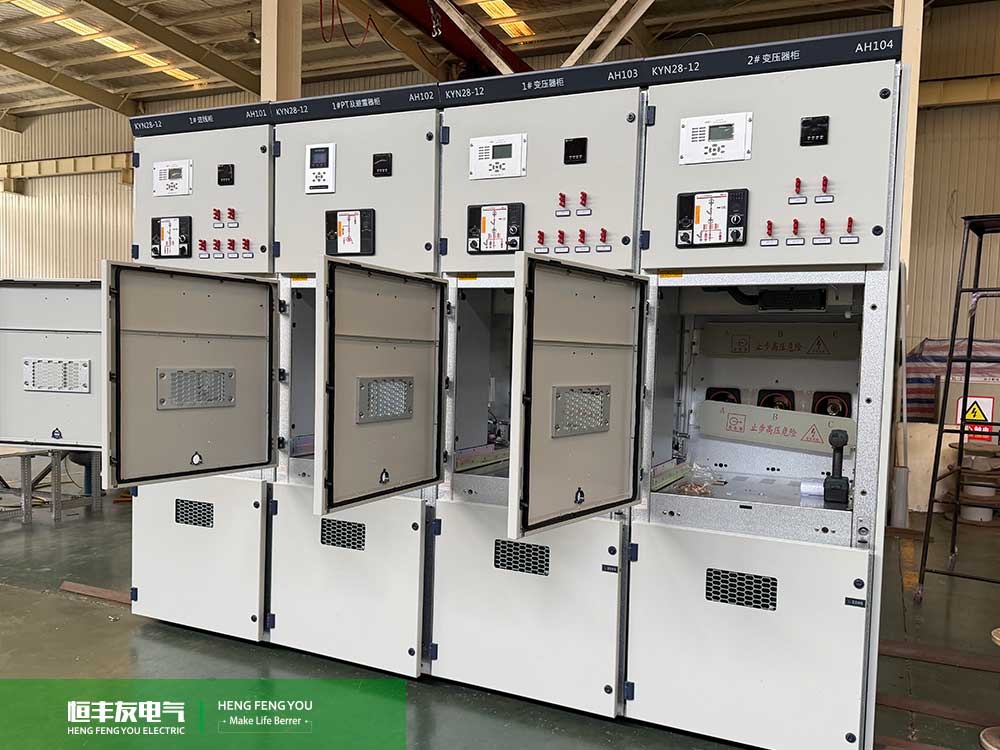
The MCC, or Motor Control Center, is primarily used in 0.4kV low-voltage systems for motor-intensive loads such as fans, pumps, mixers, and conveyors. They are categorized into Withdrawable (Drawer-type) MCCs and Fixed-partition MCCs.
Drawer units allow for plug-and-play replacement, enabling maintenance without shutting down the entire section. Fixed-partition cabinets are more cost-effective and suitable for circuits that do not require frequent maintenance.
Core Components: Main busbar, vertical branch busbar, drawer units (circuit breakers, contactors, thermal relays/motor protectors), enclosure, and secondary control circuits.
Compared to standard GGD distribution cabinets, MCCs offer modularity and higher circuit density, making them ideal for production workshops with dense motor layouts. However, due to high internal density, thermal management and busbar design are the primary focus during selection.
II. How to Determine Main and Vertical Busbar Current?
-
Main Busbar: The total incoming current for the MCC cabinet is calculated based on the transformer's low-voltage side rated current, adjusted by a simultaneity factor (diversity factor), with an additional 20% margin.
Example: For a 1600kVA transformer with a low-voltage rated current of 2300A, a 2500A main busbar is recommended.
-
Vertical Branch Busbar: The vertical busbar inside each MCC column must support the maximum simultaneous operating current of all circuits in that column.
Important Note: Many low-cost MCCs feature oversized main busbars but undersized vertical busbars. When multiple motors start simultaneously, the vertical busbar overheats and burns out.
Case Study 1: Vertical Busbar Overheating in a Pharmaceutical Plant
In a pharmaceutical workshop, an MCC column powering eight high-power mixing motors used a 630A vertical busbar, while the actual maximum operating current reached 720A. After three months of operation, the busbar overheated, melting the drawer sockets and halting multiple motors. The resulting six-day shutdown caused losses totaling 210,000 RMB.
Lesson: Vertical branch busbars must not be overlooked. Calculate the maximum simultaneous load current for the entire column and reserve at least a 25% margin.
III. Drawer Units, Short-Circuit Withstand, and Motor Protection Selection
-
Drawer Unit Current Ratings: Available in 1/4, 1/2, 1, and 2-unit sizes, selected based on motor power. High-power motors must not be forced into small drawers, as this leads to inadequate heat dissipation.
-
Short-Time Withstand Current (Icw): Standard ratings are 10kA, 15kA, and 25kA. For chemical plants or large-capacity sites, 25kA withstand is recommended. The withstand rating must be consistent across the entire cabinet, busbars, and drawer units.
-
Motor Protection: Standard fans and pumps can use thermal relays. For heavy-duty or frequent-start motors, intelligent motor protectors are recommended, offering protection against overload, phase loss, and ground faults.
Case Study 2: Undersized Drawer Unit in a Chemical Plant
A 90kW high-power pump in a chemical plant was fitted into a 1/2 drawer unit to save space. Under prolonged full-load operation, the cramped components suffered poor heat dissipation, causing the contactor to overheat and weld shut. This prevented the motor from stopping, resulting in pump damage.
Correction: Upgraded to a larger 2-unit drawer to increase heat dissipation space.
IV. Key Points for Thermal Design Selection
-
Standard Workshops: Natural convection with ventilation louvers on cabinet doors.
-
Heavy-load/High-temp Environments: Install forced ventilation fans on top of cabinets.
-
Basements/Sealed Rooms: Enhance ventilation to prevent heat buildup.
-
High Dust/Soot Environments: Install dust filters on vents and schedule regular maintenance.
V. Supplementary Selection Parameters
-
Enclosure Protection: IP30 for standard indoor use; IP41 for dusty workshops; IP42 for humid environments.
-
Communication: Intelligent MCCs should support Modbus communication to upload motor current and fault signals to the DCS system.
-
Environmental Adjustments: For coastal salt spray, apply anti-corrosion coating to the cabinet. Explosion-proof MCCs are mandatory in hazardous areas.
VI. Common Pitfalls in MCC Selection
-
Focusing only on the main busbar while ignoring vertical branch busbar sizing, leading to local overheating.
-
Forcing high-power motors into undersized drawers, causing insufficient heat dissipation space.
-
Mismatched short-time withstand ratings between cabinet and drawer units, causing drawer burnout during short circuits.
-
Lack of forced cooling for heavy-load circuits, resulting in frequent tripping during summer heat.
-
Using standard MCCs in dusty or corrosive environments without upgrading the protection rating.
VII. Conclusion
MCC selection should never be based solely on circuit count. The main and vertical busbars determine overall current-carrying capacity, drawer units must match motor power, short-circuit withstand ratings must handle fault impacts, and thermal design ensures long-term stability. For standard plants, use standard drawer-type MCCs; for heavy-duty chemical workshops, increase the withstand rating, use larger drawers, and install forced cooling. Selection must follow the GB 7251.1 national standard, comprehensively evaluating motor power, simultaneity factors, and site conditions to prevent economic losses from overheating and downtime.
Hengfengyou Electric can provide complete solutions for MCC Motor Control Centers, GGD low-voltage cabinets, and power distribution boxes, supporting circuit layout and busbar calculations based on motor lists.
Email: hunter@hengfengyou.com
WhatsApp/Mobile: +8618224429139