HENGFENGYOU ELECTRIC --SMART ELECTRIC GLOBAL SERVICE PROVIDER



Writer: Hengfeng you electric Time:2026-03-30 views:times
As core components of power distribution systems, the standardized installation and commissioning of transformers, coupled with meticulous initial operation management, are vital to preventing early-stage failures and ensuring long-term stability. For both dry-type and oil-immersed transformers, every step from site arrival to full-load operation must strictly adhere to industry regulations. By controlling core operational links, the equipment can meet its design performance standards and achieve optimal power supply efficiency. This article outlines the essential steps for installation and commissioning alongside monitoring priorities for initial operation, providing a practical guide for site construction and maintenance.
The foundation of a successful installation lies in thorough preparation and rigorous site acceptance, which serve to eliminate inherent quality defects and compatibility issues.
Equipment Verification: Upon arrival, the model and specifications must be verified against design requirements.
Physical Inspection: Inspectors must check for signs of impact or deformation. For dry-type units, the epoxy resin casting must be free of cracks or peeling; for oil-immersed units, the tank must show no signs of oil leakage and all seals must be intact. All factory test reports and certificates must be verified as complete.
Foundation Inspection: Before installation, foundation acceptance must be completed. For dry-type transformers, supports must be level with adequate clearance for heat dissipation. For oil-immersed units, the foundation platform must be robust, with oil sumps and drainage facilities meeting fire safety codes. The installation area must be clean, well-ventilated, dust-proof, and free of corrosive gases or standing water.
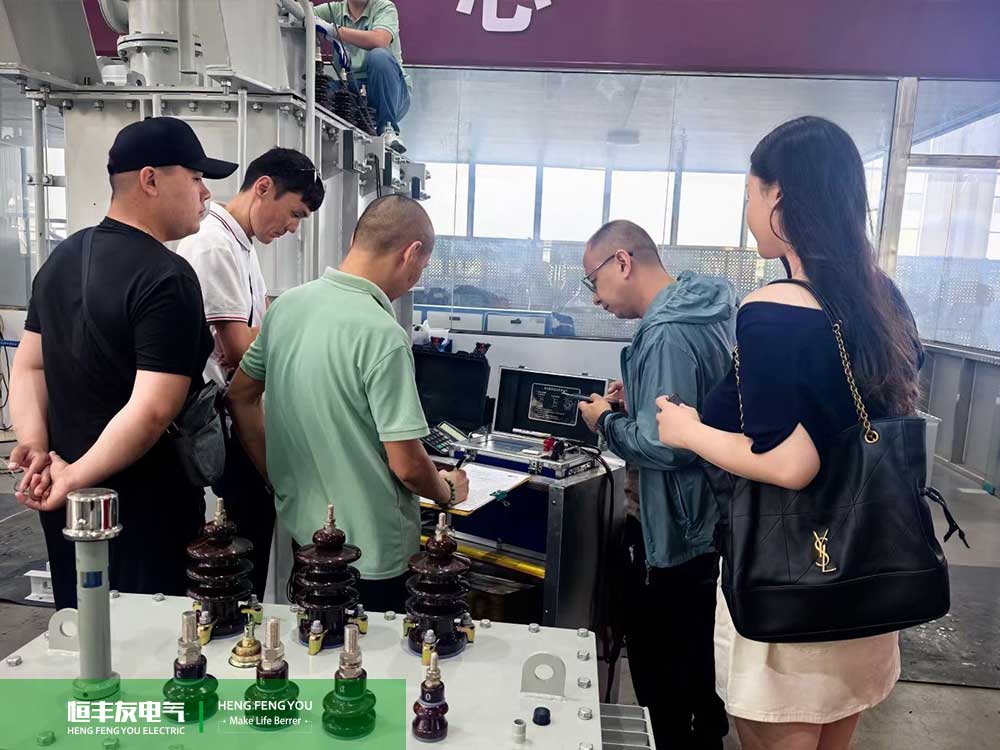
Core installation and commissioning must balance general standards with the specific requirements of the equipment type through precise operation and item-by-item verification.
General Commissioning Points: These include verifying that the core is grounded at a single point to prevent overheating caused by multi-point grounding; ensuring correct phase sequence and tightening all terminals to prevent overheating from poor contact; and completing the grounding system installation to ensure grounding resistance meets specifications for the casing, neutral point, and other critical components.
Type-Specific Focus: * Dry-type transformers: Technicians must calibrate the linkage between cooling fans and temperature control devices, ensuring accurate fan start/stop thresholds and verifying that winding insulation distances meet standards.
Oil-immersed transformers: Proper oil filling and air bleeding are essential, using vacuum oil-filling processes to eliminate bubbles. Protection devices such as Buchholz relays and oil thermometers must be tested for sensitivity, and all bushings and flange seals must be checked for leaks.
Handover Testing: Following installation, mandatory handover tests—including insulation resistance, turns ratio, and DC resistance tests—must be conducted. Only after all parameters meet the standards can the trial operation phase begin.
The core of initial operation management is staged monitoring, intensified inspection, and timely response to anomalies to capture early failure signals. Trial operation is divided into two phases:
No-load Trial Operation: Upon energization, the equipment must be monitored for abnormal noise or odors. Technicians must check if the winding temperature (dry-type) or top oil temperature (oil-immersed) is within normal ranges and ensure no abnormal grounding current. After 24 hours of trouble-free no-load operation, the unit proceeds to staged load testing.
Staged Load Operation: The load rate should be increased gradually (e.g., from 50% to 80% to full rated load). After each stage, the equipment status must be checked, focusing on load loss, temperature gradients, and terminal temperature rise. For oil-immersed units, oil levels and quality must be monitored; for dry-type units, the automatic switching of the cooling system must be verified.
72-Hour Critical Monitoring Period: The first 72 hours of official operation constitute a critical window. Inspection frequency must be increased, and operational data must be recorded and compared with rated parameters. Any signs of slight abnormal noise, localized high temperatures, or grounding current anomalies require an immediate shutdown for investigation to prevent minor issues from escalating into major damage.
The recording and archiving of initial operation data are vital for the equipment's long-term management. Installation and commissioning records, handover test data, and initial operation monitoring results must be organized into a dedicated equipment file. This file serves as the original baseline for future routine maintenance, condition assessment, and troubleshooting.
The installation, commissioning, and initial operation management of a transformer represent the first critical milestone in its lifecycle. Non-standard installation practices can embed long-term hidden risks, while lax initial monitoring may result in missed opportunities to address early-stage faults. Field technicians must strictly follow electrical equipment installation regulations and manage every detail—from acceptance to staged trial runs. Through refined operation and monitoring, transformers can achieve safe, high-efficiency, and stable operation, providing a solid foundation for a reliable power system.
WhatsApp:
+86 13969788801
+86 15853252696
Tel:+86-0532-68688801
Fax:+86-0532-87038801
Email: hfy@hengfengyou.com
Address: No.638,Zhongcheng Road, Chengyang District, Qingdao City,China
Leave a message now - get the latest industry insights, star products, and success stories of hengfengyou electric