HENGFENGYOU ELECTRIC --SMART ELECTRIC GLOBAL SERVICE PROVIDER



Writer: Hengfeng you electric Time:2026-04-15 views:times
As the central hub of a power system, a transformer is highly susceptible to severe accidents such as winding burnout, insulation breakdown, or even fires and explosions once an internal fault occurs. Therefore, rational configuration of relay protection devices and precise completion of protection settings form the critical line of defense for blocking fault escalation and ensuring the safety of the grid and equipment.
Protection configuration logic and setting principles vary significantly across transformers of different capacities and types. This article combines common protection schemes for distribution and power transformers to summarize core configuration requirements and operational control points.
I. Dual-layer Configuration Framework of Transformer Protection
Transformer protection follows a dual-layer configuration principle: Primary Protection + Backup Protection. Primary protection is utilized for the rapid isolation of internal equipment faults, while backup protection addresses issues such as overcurrent and overload caused by external faults.
II. Primary Protection: Rapid Response to Internal Faults
Primary protection schemes differ markedly depending on the transformer type:
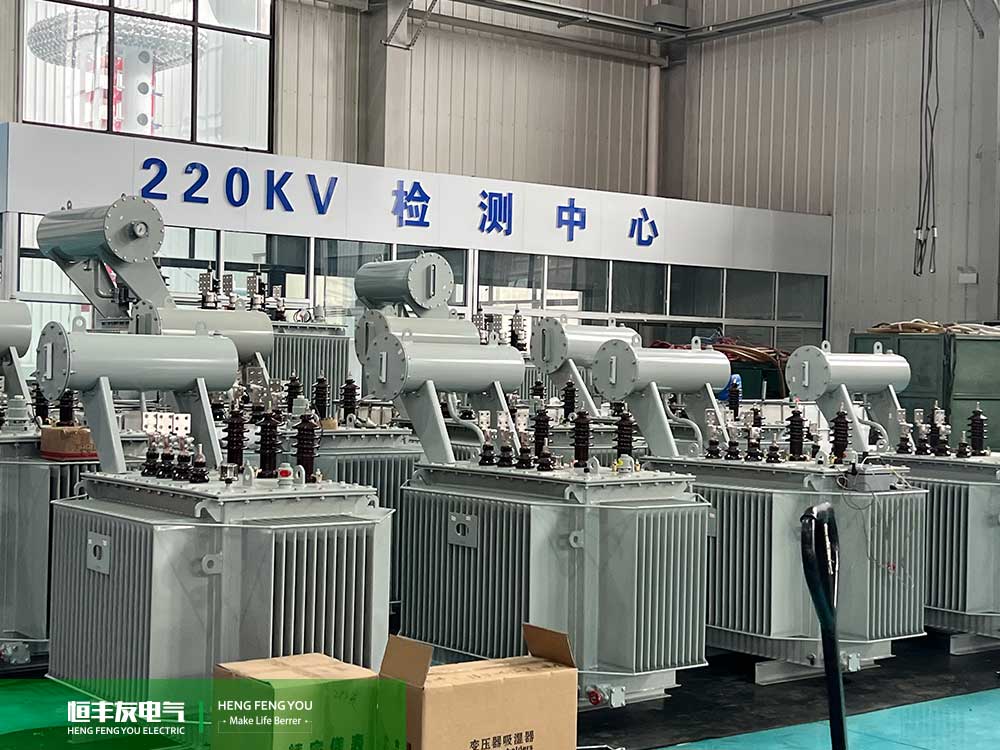
Oil-immersed Power Transformers Primary protection mainly consists of differential protection and gas protection. Differential protection quickly reflects phase-to-phase and inter-turn short circuits in windings, bushings, and outgoing lines, offering high speed and sensitivity. Gas protection targets specific issues such as internal tank faults, oil level drops, and gas generation from insulation oil decomposition. It is divided into Light Gas (alarm only) and Heavy Gas (direct tripping to disconnect power).
Dry-type Transformers Due to the absence of insulating oil, gas protection is omitted. Primary protection relies on differential protection coupled with winding overtemperature protection and fan failure protection. Temperature sensors monitor winding temperature rise in real-time, triggering alarms and trips in stages if thresholds are exceeded.
III. Backup Protection: Addressing External Faults and Abnormal Conditions
Backup protection is adapted to various fault scenarios, primarily including:
Overcurrent Protection: Primarily addresses external phase-to-phase short circuits, serving as a backup for primary protection and a remote backup for adjacent lines.
Zero-sequence Overcurrent Protection: Specifically designed for single-phase grounding faults in neutral-grounded systems to prevent equipment damage from sustained grounding faults.
Overload Protection: Classified as abnormal operation protection, it triggers signals rather than tripping to remind personnel to adjust loads and prevent accelerated insulation aging from long-term overloading.
Overexcitation Protection: Added for large-capacity main transformers to counter core overexcitation faults caused by abnormal voltage rises.
IV. Core Principles of Protection Setting
The setting process must strictly follow power system regulations, balancing sensitivity and selectivity:
Differential Protection Setting: Requires calculation of balance coefficients to eliminate unbalanced currents caused by ratio differences, while evading magnetizing inrush currents during no-load energization to prevent maloperation.
Overcurrent Protection Setting: Values must evade rated load currents and motor starting currents. Time coordination must follow the stepped principle to ensure that the local protection does not trip prematurely for downstream faults.
Gas Protection Setting: Action thresholds are adjusted based on equipment capacity. Small-capacity distribution transformers may have relaxed alarm values, while large main transformers require strict control of gas volume action values to ensure early warning of even minor faults.
V. Operational Control and Routine Maintenance
Once protection devices are in operation, standardized management must be maintained:
Periodic Calibration: Verify the action accuracy and circuit integrity of protection devices; check for loose wiring or sensor failures.
Fault Traceability: After a fault, record the protection action type and signal status promptly. Analyze causes using fault recording data to provide a basis for subsequent maintenance.
Standardized Operation: Unauthorized modification of protection settings or withdrawal of protection devices is strictly prohibited. If protection must be withdrawn under special working conditions, comprehensive safety contingency measures must be formulated.
VI. Conclusion
Proper configuration and precise settings allow transformers to receive rapid and accurate protection during faults, preventing minor issues from evolving into major equipment accidents. In practical operations, protection schemes should be flexibly adjusted based on transformer type, capacity, and operating scenarios, while daily management must be strengthened to ensure relay protection remains a reliable shield for safe transformer operation.
WhatsApp:
+86 13969788801
+86 15853252696
Tel:+86-0532-68688801
Fax:+86-0532-87038801
Email: hfy@hengfengyou.com
Address: No.638,Zhongcheng Road, Chengyang District, Qingdao City,China
Leave a message now - get the latest industry insights, star products, and success stories of hengfengyou electric