Resin Cast Dry-Type Transformers vs. Oil-Immersed Transformers: Key Selection Points and Industry Trends
Writer: Hengfeng you electric Time:2026-05-26 views:times
In power system configurations, resin cast dry-type transformers and oil-immersed transformers are the two most widely used product categories. They differ significantly in structure, performance, and application scenarios, which often leads to user confusion during the selection process.
I. Core Components and Classification of Transformers
The core components of a transformer remain the magnetic core and the windings. The core is typically constructed by laminating high-permeability silicon steel sheets, while the windings are wound with insulated conductors. Based on the number of windings, they can be classified into types such as double-winding and multi-winding. Classified by cooling method, besides the common air-cooled (dry-type) and oil-immersed types, there are special types like forced air cooling and forced oil circulation cooling, adapted to different power demands.
II. Performance Characteristics of Resin Cast Dry-Type and Oil-Immersed Transformers
-
Resin Cast Dry-Type Transformer: Utilizes a resin encapsulation casting process that seals the core and windings. It offers excellent insulation, is fire and explosion-proof, eliminates concerns about oil leakage, operates with low noise, and has simple maintenance requirements. It is particularly suitable for indoor settings with extremely high safety requirements, such as high-rise buildings, data centers, and hospitals.
-
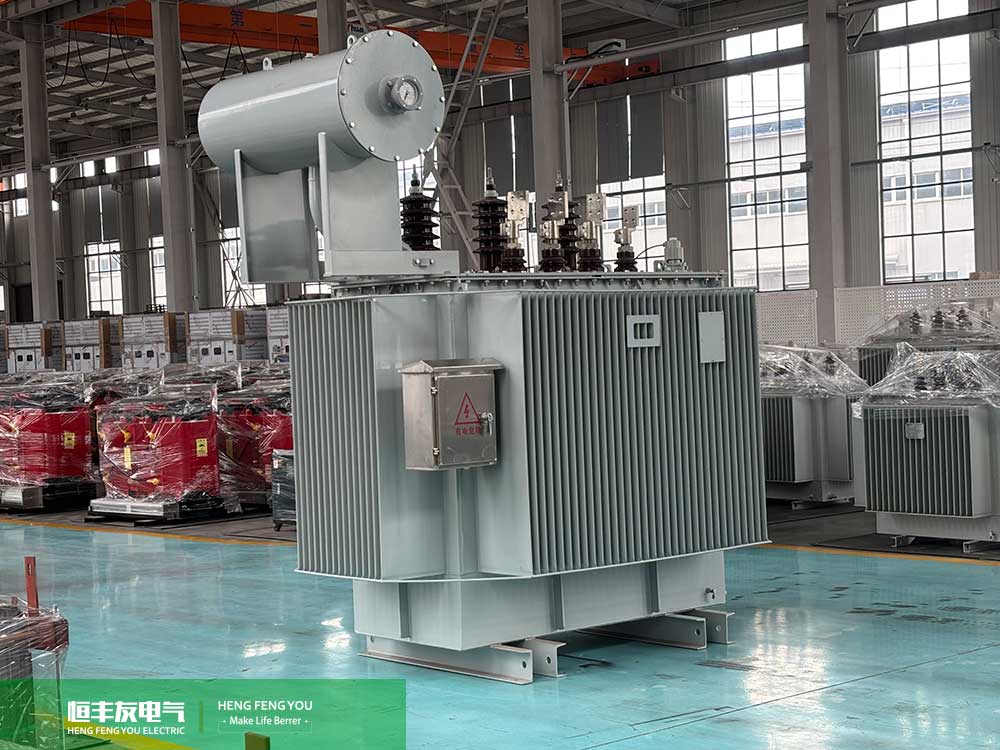
Oil-Immersed Transformer: Uses insulating oil as both the cooling and insulating medium. It has high heat dissipation efficiency, can withstand greater power loads, and shows clear advantages in high-capacity, long-distance power transmission. It is mostly applied in scenarios like outdoor substations and main distribution in industrial parks. However, it requires leak-prevention measures and fire-fighting facilities.
III. Key Considerations for Transformer Selection
Selection must be closely tied to actual needs, focusing on three main points:
-
Load Characteristics: The short-term peak load and long-term stable load must match the transformer's capacity to avoid overload damage due to insufficient capacity.
-
Installation Environment: For confined indoor spaces, the resin cast dry-type is prioritized. For open outdoor sites with high capacity demands, the oil-immersed type often offers better cost-effectiveness.
-
Operational Costs: These include the initial procurement cost, later maintenance expenses, and energy consumption. The dry-type transformer involves a higher initial investment but lower maintenance costs, while the oil-immersed type shows the opposite trend. A comprehensive calculation of the total life-cycle cost is necessary.
IV. Current Status and Development Trends of China's Transformer Industry
With the advancement of new power system construction and the increasing demand for integrating renewable energy sources like wind and solar PV, the transformer industry is experiencing a wave of technological upgrading. In the current market, high-efficiency and energy-saving products have become mainstream, and intelligent transformation is accelerating. Many transformers are now equipped with condition monitoring and remote control functions, enhancing operational reliability and management efficiency. Regarding market competition, besides traditional large backbone enterprises, innovative companies specializing in high-end dry-type transformers and special oil-immersed transformers are gradually emerging. Industry competition is shifting from scale-based competition to technology and service-based competition, steadily developing overall towards green, intelligent, and customized directions.
Summary:
This text analyzes and compares two fundamental transformer types: resin cast dry-type and oil-immersed. It details their components, classification, performance characteristics (safety, maintenance, capacity), and typical applications. It outlines the three critical factors for their selection: load characteristics, installation environment, and life-cycle costs. Finally, it describes the evolution of China's transformer industry, highlighting trends towards energy efficiency, intelligent digitalization, and value-added competition based on technology and services, driven by the energy transition.