HENGFENGYOU ELECTRIC --SMART ELECTRIC GLOBAL SERVICE PROVIDER



Writer: Hengfeng you electric Time:2026-06-12 views:times
In engineering projects such as industrial plants, commercial buildings, and business parks, high and low-voltage complete switchgear and distribution equipment serve as the backbone for power distribution, control, and protection. They directly dictate the safety, stability, and long-term maintenance efficiency of the entire power system. Given the wide variety of equipment and their distinct functional roles, improper selection or poor on-site adaptation can easily lead to capacity mismatches, insufficient ingress protection (IP ratings), and bottlenecks during future expansions. Drawing on real-world engineering scenarios, electrical engineers from Hengfengyou Electric provide a structured breakdown of the selection logic and critical on-site adaptation requirements for complete switchgear and distribution equipment, offering a comprehensive reference for power distribution system design and equipment sourcing.
I. Stick to Three Core Principles to Guarantee Quality at the Selection Stage
The selection of high and low-voltage complete equipment must strictly adhere to three core principles: operational suitability, capacity matching, and standard compliance.
Precise Calculation to Avoid Excess and Overload: Before finalizing equipment specifications, engineers must accurately calculate the total power load, diversity factor, and room for future load growth in the target area. This data determines critical parameters such as the rated current and short-circuit breaking capacity of the switchgear selection and distribution cabinets. This prevents equipment overloading caused by under-sizing, while also avoiding the financial waste associated with excessive over-specifying.
Compliance with Standards to Ensure Component Quality: Equipment selection must strictly comply with international standards (IEC), national standards (GB), and industry-wide norms. The cabinet materials, insulation parts, and switching components must be certified and field-proven to guarantee optimal electrical performance and mechanical lifespan right from the source.
Tailored Protection to Match On-Site Conditions: The ingress protection (IP rating) of the enclosures must be determined based on the actual operating environment. For harsh environments exposed to moisture, dust, or chemical corrosion, custom cabinets with high IP ratings (e.g., IP54 or IP65) are required. For standard indoor power distribution scenarios, conventional complete equipment is sufficient.
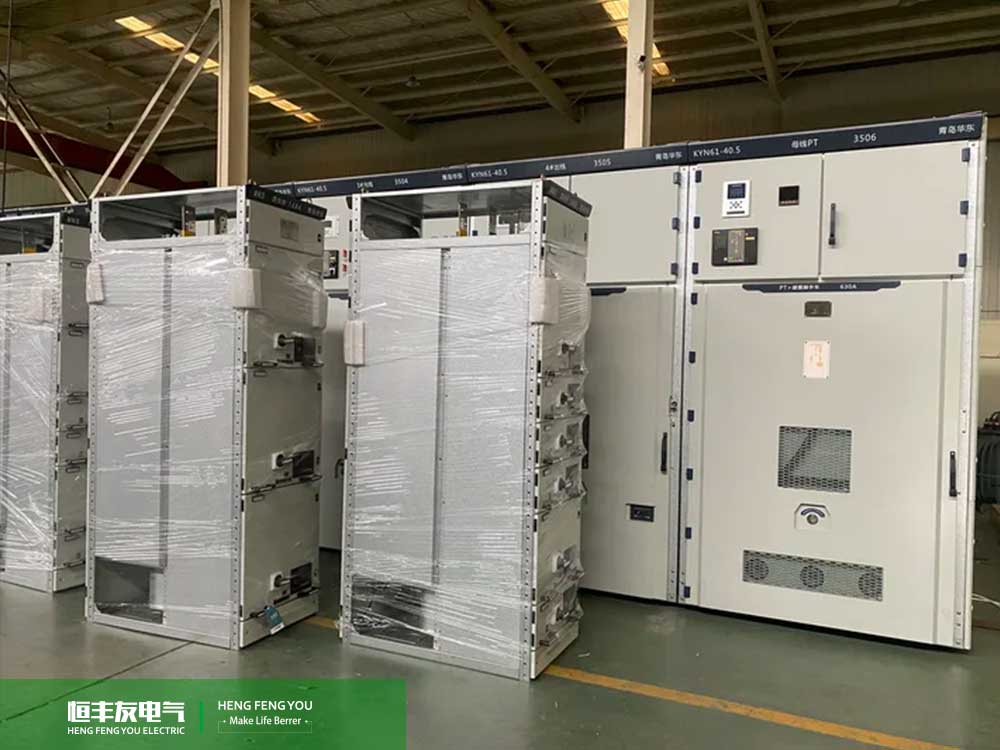
II. Focus on Diverse Application Scenarios to Define Equipment Configuration
Different application scenarios call for distinct priorities and configurations in power distribution equipment selection:
Industrial Plant Scenarios: Prioritizing High Capacity and Flexibility Industrial facilities are characterized by concentrated high-power loads. For these settings, withdrawable (draw-out) low-voltage distribution cabinets combined with central-positioned high-voltage switchgear are highly recommended. These systems offer high breaking capacity, easy maintenance, and flexible loop expansion, making them ideal for managing the start-stop controls of heavy machinery, air compressors, and production lines.
Commercial Complex Scenarios: Focusing on Compactness and Safety Commercial buildings feature high foot traffic and intricate distribution circuits. Priority should be given to compact complete equipment to minimize the footprint of the electrical room. Additionally, these systems must integrate reliable residual current protection (leakage protection) and fire linkage functions to meet stringent fire safety and emergency power requirements.
Residential Community Scenarios: Balancing Economy and Stability Residential power distribution prioritizes cost-effectiveness and long-term reliability. A combination of fixed low-voltage distribution cabinets and ring main units (RMUs) is typically recommended. This setup is structurally straightforward, has a low failure rate, and simplifies routine operations and maintenance for property managers or utility companies.
III. Strictly Control On-Site Installation Details for Seamless Civil-Electrical Integration
The compatibility between equipment installation, civil engineering foundations, and the overall electrical layout directly affects commissioning results and equipment service life:
Industrial Plant Scenarios: Prioritizing High Capacity and Flexibility Industrial facilities are characterized by concentrated high-power loads. For these settings, withdrawable (draw-out) low-voltage distribution cabinets combined with central-positioned high-voltage switchgear are highly recommended. These systems offer high breaking capacity, easy maintenance, and flexible loop expansion, making them ideal for managing the start-stop controls of heavy machinery, air compressors, and production lines.
Commercial Complex Scenarios: Focusing on Compactness and Safety Commercial buildings feature high foot traffic and intricate distribution circuits. Priority should be given to compact complete equipment to minimize the footprint of the electrical room. Additionally, these systems must integrate reliable residual current protection (leakage protection) and fire linkage functions to meet stringent fire safety and emergency power requirements.
Residential Community Scenarios: Balancing Economy and Stability Residential power distribution prioritizes cost-effectiveness and long-term reliability. A combination of fixed low-voltage distribution cabinets and ring main units (RMUs) is typically recommended. This setup is structurally straightforward, has a low failure rate, and simplifies routine operations and maintenance for property managers or utility companies.
IV. Standardize Post-Commissioning Adaptation for Full Lifecycle Operations
Routine management after the equipment goes live is equally vital to long-term performance:
Routine Inspections and Preventative Maintenance Once the power distribution system is operational, maintenance teams must regularly check the temperature rise of internal switching components, the tightness of terminal connections, and the aging status of insulation parts. Accumulations of dust and debris inside the cabinets must also be cleared promptly.
Leveraging Modular Design for Future Expansion To accommodate future load growth, preference should be given to complete equipment with modular designs during the initial planning stage, leaving ample spare circuits and physical space. This allows new distribution circuits to be added later without extensive modifications to the cabinet structure, significantly reducing future retrofit costs.
Establishing Digital Operation Logs By keeping detailed operation logs that record maintenance history, faults, and load fluctuations, facility managers can achieve standardized, full-lifecycle management of their complete equipment from commissioning to decommissioning.
Conclusion
The selection and on-site adaptation of high and low-voltage complete switchgear and distribution equipment is a holistic and systematic task in power distribution engineering. Only by scientifically selecting equipment based on load characteristics, operating environments, and long-term blueprints—while strictly controlling installation details and committing to routine maintenance—can engineers fully leverage the performance advantages of mature equipment, such as those from Hengfengyou Electric. This comprehensive approach is the only way to ensure the safe, economical, and stable operation of the entire power distribution system over the long term.
We sincerely invite global EPC contractors and power/electrical experts to partner and discuss collaboration opportunities:
WhatsApp:
+86 13969788801
+86 15853252696
Tel:+86-0532-68688801
Fax:+86-0532-87038801
Email: hfy@hengfengyou.com
Address: No.638,Zhongcheng Road, Chengyang District, Qingdao City,China
Leave a message now - get the latest industry insights, star products, and success stories of hengfengyou electric