HENGFENGYOU ELECTRIC --SMART ELECTRIC GLOBAL SERVICE PROVIDER



Writer: Hengfeng you electric Time:2026-05-29 views:times
The overall operation and control of a substation, as a core hub in the generation, transmission, and distribution links of a power system, is the crucial node connecting power plants with users. Its overall operational stability and reliability directly determine the power supply quality and safety of the electrical network. A substation encompasses a variety of electrical equipment, control systems, and auxiliary facilities, with each part working in coordination and supporting one another. Therefore, managing the overall operation control and collaborative equipment maintenance is central to ensuring the efficient operation of the substation and avoiding systemic failures. This article outlines the practical operational points revolving around the overall substation layout, core equipment collaboration, operation control, and safety protection, providing a guide for on-site operation and maintenance work.
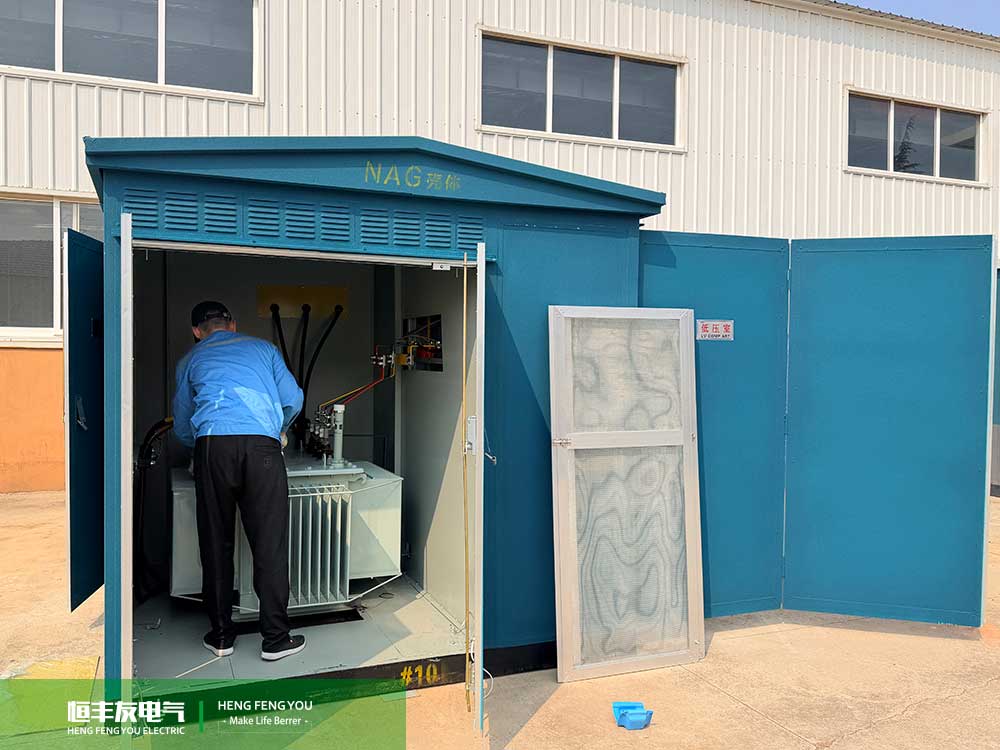
The overall operation of a substation relies on the close coordination of core equipment, auxiliary systems, and control systems, where each part has a clear division of labor and is indispensable.
Aside from the transformer, which serves as the core of energy conversion, the core equipment also includes circuit breakers, disconnectors, instrument transformers, and reactive power compensation devices:
Circuit Breakers: Responsible for cutting off or connecting circuits, quickly isolating fault areas.
Disconnectors: Used to isolate the power supply during equipment maintenance to ensure maintenance safety.
Instrument Transformers: Divided into current transformers and voltage transformers, responsible for collecting current and voltage signals to provide data support for protection devices and monitoring systems.
Reactive Power Compensation Devices: Used to balance the reactive power of the grid, improve the power supply power factor, and ensure voltage stability.
Auxiliary systems cover cooling systems, fire protection systems, and lightning protection grounding systems. The cooling system lowers the temperature of core equipment, the fire protection system prevents electrical fires, and the lightning protection grounding system resists lightning strikes and overvoltages to prevent equipment damage.
The control system takes the monitoring background as its core, achieving real-time monitoring, operational control, and fault alarming for the operational status of all equipment in the station.
The main wiring method of a substation is key to determining the flexibility and reliability of the overall operation, and must be reasonably selected based on the power supply scale and load level. Commonly used main wiring methods include:
Single Busbar Wiring: Simple structure and low investment cost, suitable for small distribution stations, but its reliability is low as a fault requires a full station power outage for maintenance.
Double Busbar Wiring: Equipped with a backup busbar, it can achieve alternate busbar maintenance without affecting normal power supply, suitable for medium and large substations.
One-and-a-Half Circuit Breaker Wiring: Extremely high reliability, where any circuit breaker failure does not affect the continuity of power supply, mostly used for large-capacity, high-load hub substations.
The operational control of the main wiring needs to focus on the balance of busbar voltage and current, regularly checking the status of busbar joints and insulators to avoid contact failures or insulation damage that could trigger busbar faults.
Station-wide collaborative maintenance is the core of ensuring the stable overall operation of the substation, following the principles of "comprehensive inspection, key monitoring, and collaborative disposal."
Daily inspections must cover all equipment and auxiliary facilities in the station, focusing on checking whether the operating mechanisms of circuit breakers and disconnectors are flexible, whether the insulation of instrument transformers is intact, and whether the operating status of reactive power compensation devices is normal, while troubleshooting potential hazards in cooling, fire protection, and lightning protection systems.
Key monitoring should focus on core parameters such as station-wide voltage, current, and power factor to ensure all indicators meet regulatory requirements. When parameter anomalies are found, timely analysis must determine whether they are caused by equipment failure or load fluctuations, so as to collaboratively adjust the operational status of relevant equipment.
During equipment maintenance, proper coordination among various systems is required. For example, when maintaining a circuit breaker, the corresponding disconnector must be disconnected in advance, grounding protection must be set up, and the monitoring background must be notified to pause relevant protection devices to avoid malfunction.
The safety protection of a substation is the bottom line of overall operation control, requiring the construction of a comprehensive safety protection system.
First, strictly execute the electrical operation ticket and work ticket systems to standardize equipment operation and maintenance processes, eliminating unauthorized operations.
Second, regularly carry out lightning protection grounding testing to ensure the grounding resistance meets standard requirements, preventing lightning strikes from causing equipment failure.
Meanwhile, strengthen the maintenance of fire fighting facilities, regularly inspect equipment such as fire extinguishers, fire hydrants, and fireproof sealing, and conduct emergency fire drills.
For high-voltage equipment areas, set up clear safety warning signs to strictly prohibit unauthorized personnel from entering, and concurrently conduct safety training for operation and maintenance personnel to enhance emergency response capabilities.
The overall operation of a substation is a systematic project, the core of which lies in the coordination and cooperation of various equipment and systems rather than the independent operation of a single device. Only by optimizing the overall layout, executing collaborative control of core equipment, maintaining regular maintenance, and implementing all-around safety protection can the substation be guaranteed to operate stably and efficiently over the long term, building a solid hub defense line for the reliable power supply of the power system.
WhatsApp:
+86 13969788801
+86 15853252696
Tel:+86-0532-68688801
Fax:+86-0532-87038801
Email: hfy@hengfengyou.com
Address: No.638,Zhongcheng Road, Chengyang District, Qingdao City,China
Leave a message now - get the latest industry insights, star products, and success stories of hengfengyou electric