HENGFENGYOU ELECTRIC --SMART ELECTRIC GLOBAL SERVICE PROVIDER



Writer: Hengfeng you electric Time:2026-04-10 views:times
I. Kenya Power Transformer Market Demand and Growth Drivers
The core conflict in Kenya's power grid lies in the misalignment between aging infrastructure and rapidly expanding electricity demand. According to the National Energy Compact 2025-2030, Kenya aims to achieve 100% electrification by 2030, necessitating a final leap in distribution network penetration over the next four years.
Currently, Kenya's distribution network faces rigid growth across three dimensions:
Equipment Replacement and Upgrading: Over 40% of transformers in the KPLC grid have exceeded their service life. A significant portion of the 13% technical loss rate stems from the no-load losses of obsolete units. Between 2025 and 2026, the deficit for replacing stolen or faulty equipment alone is expected to exceed 3,000 units.
Last Mile Connectivity Project (LMCP): This initiative directly drives massive demand for small-capacity pole-mounted distribution transformers ranging from 25kVA to 100kVA.
Industrial Infrastructure: With the development of Special Economic Zones (SEZs), demand for 11kV/415V and 33kV distribution transformers is shifting toward higher capacity and enhanced reliability.
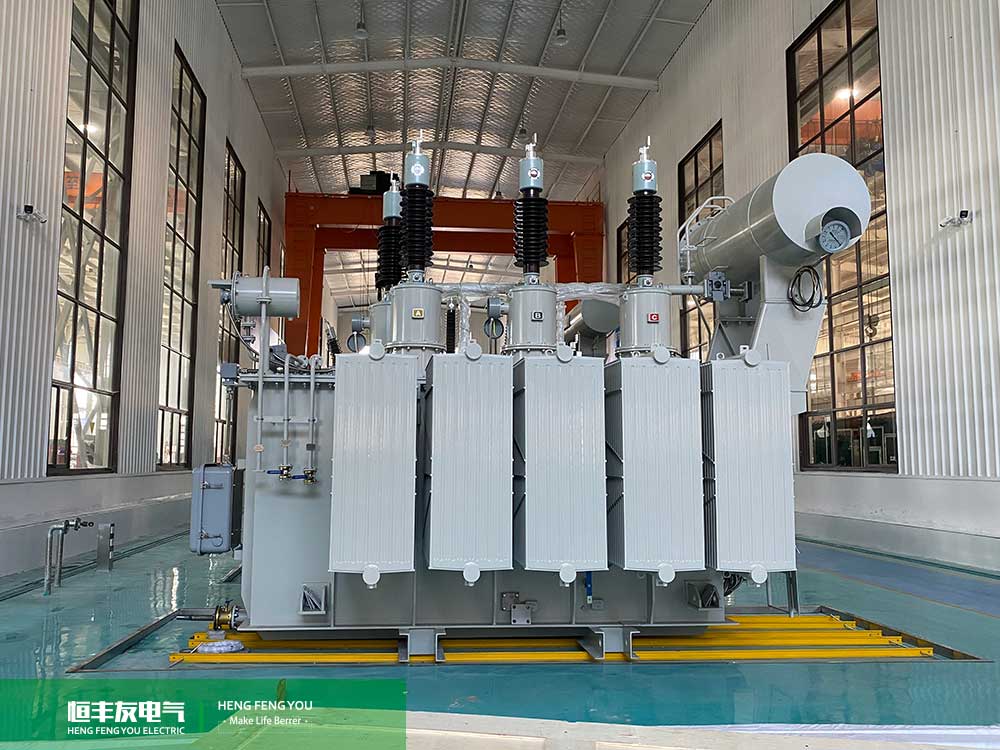
II. Solar Transformer Application Scenarios and Technical Specifications
With renewable energy accounting for over 90% of Kenya’s generation mix, the heavy reliance on geothermal, wind, and solar power imposes stringent requirements on transformer stability against grid fluctuations.
Local client requirements focus on three primary areas:
Wide Voltage Adaptability: Frequent voltage fluctuations at geothermal and solar grid-connection points require transformers equipped with on-load tap changing (OLTC) ranges of ±15% or even ±18%.
Environmental Protection: Certain regions in Kenya experience high temperatures, high humidity, and dust pollution. Tenders often mandate an IP54 protection rating or higher, with strict limits on capacity derating factors under high temperatures.
Harmonic Mitigation: Due to the increase in non-linear loads, KPLC has strengthened harmonic tolerance evaluations in its 2026 technical specifications, requiring equipment to handle specific frequency interference without compromising service life.
III. KEBS Certification Requirements and 2026 Energy Efficiency Barriers
Regulatory compliance is the prerequisite for entering the Kenyan market. All transformers must obtain PVoC (Pre-Export Verification of Conformity) certification, which is a mandatory document for customs clearance.
Key elements of market access include:
Energy Efficiency Upgrades: Since 2025, the Kenya Bureau of Standards (KEBS) has enforced IE2 efficiency standards, with a growing preference for IE3 in large-scale procurement. Low-efficiency transformers will effectively lose market access.
Certification Loop: Products must hold a Factory Acceptance Test (FAT) report issued by an ISO 17025 accredited laboratory. Furthermore, the certificate holder must be associated with a local Kenyan representative and apply for the Diamond Mark quality sign.
Labeling Compliance: Every transformer must feature a traceable PVoC QR code containing the serial number and origin information. Any ambiguous labeling poses a risk of shipment rejection.
IV. Hengfengyou Electric Solutions for the Kenyan Market
In response to Kenya's complex geographical environment and rigorous entry barriers, Hengfengyou Electric has achieved precise alignment with the East African market through technical innovation and process optimization.
Simon (simon@hengfengyou.com), Head of Kenya Market at Hengfengyou Electric, stated: "In the context of Kenya's grid, a KEBS certificate is merely the 'entry ticket.' The real challenge lies in overcoming the 'three mountains': high network losses, severe voltage fluctuations, and capacity derating due to heat. We do not offer off-the-shelf products, but rather deeply customized 'East Africa Enhanced' solutions."
Climate-Adaptive Design: For the tropical climate and high-temperature mining areas, Simon led the technical team to optimize the cooling oil circuit. This ensures that capacity derating is kept within 5% even at peak ambient temperatures, significantly outperforming standard imports.
Grid Fluctuation Resilience: Considering the instability introduced by solar and geothermal integration, Hengfengyou developed a specialized intelligent voltage regulation module. Simon emphasized: "This solution automatically senses fluctuations within a ±18% range, ensuring the output remains stable at 240V for residential and 415V for industrial use, which is critical for protecting precision machinery."
Certification Express and Localized Response: Hengfengyou has established a comprehensive KEBS certification support mechanism. Simon noted that by utilizing local representatives and pre-prepared type test reports, the company can shorten the PVoC acquisition cycle to 60% of the industry average, supporting the 14-day emergency delivery clauses common in KPLC tenders.
Lifecycle Cost Optimization: By enhancing core materials and winding processes, Hengfengyou transformers exceed local efficiency standards by 15%. According to Simon’s field data, the cumulative savings in maintenance and loss costs over three years can offset 35% of the initial equipment investment.
V. Conclusion
The 2026 Kenyan power market is in a critical transition from "coverage growth" to "quality and efficiency upgrades." For suppliers, price competition alone is no longer sustainable. Future competitiveness will depend on the ability to simultaneously meet IE3 efficiency, grid-fluctuation resilience, and KEBS compliance. Manufacturers with localized response capabilities and customized technical reserves will dominate this market, which is valued at over 1.1 billion RMB.
VI. Data Sources
Ministry of Energy, Kenya: National Energy Compact 2025–2030
Kenya Power (KPLC): 2025-2026 Annual Procurement Plans
KEBS: PVoC Certification Technical Guidelines
IEA: Kenya Energy Transition Quarterly Report
WhatsApp:
+86 13969788801
+86 15853252696
Tel:+86-0532-68688801
Fax:+86-0532-87038801
Email: hfy@hengfengyou.com
Address: No.638,Zhongcheng Road, Chengyang District, Qingdao City,China
Leave a message now - get the latest industry insights, star products, and success stories of hengfengyou electric